
Respect on the deck and in the lane
For the coach, the teammate, the opponent, and the official. A CNA swimmer is recognized by how they behave when they win and, above all, by how they behave when they lose.
The Club
A swim club founded in Vélez-Málaga in 1996.
History
A short set of sourced profiles. The club’s own story stays on this page.
Read the historyThe club was founded in Vélez-Málaga in 1996.
Club Natación Axarquía was founded in 1996 in Vélez-Málaga with a simple idea: that the children of the region could learn to swim well and, if they wanted, compete without having to travel to Málaga city. That first group of swimmers and families laid the foundation for everything that followed.
Since then, hundreds of swimmers have come through our lanes. Some came to learn to float and stayed ten seasons. Others arrived later in life looking to get in shape and ended up on a starting block. And many, after they stopped competing, have come back as volunteers, as instructors, or simply as parents who bring their children to the same club where they learned.
Almost three decades later we are still a regional club. We do not have the structure of a big-city club. We do have continuity, people who know each other, and a way of working that has been refined season after season.
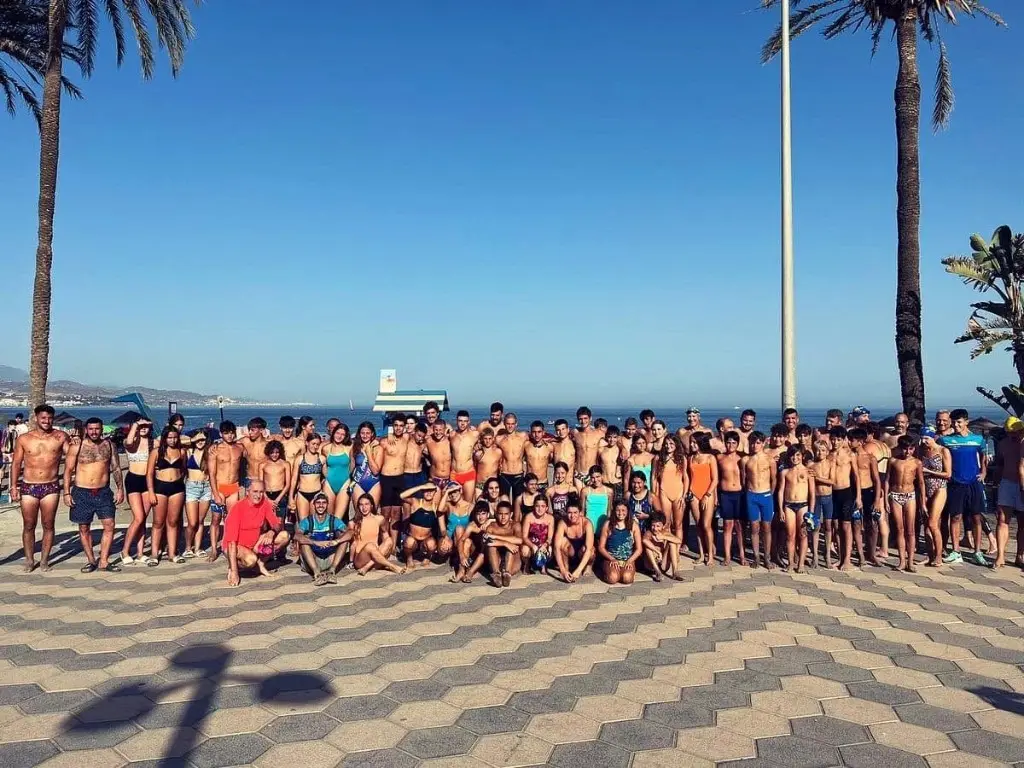
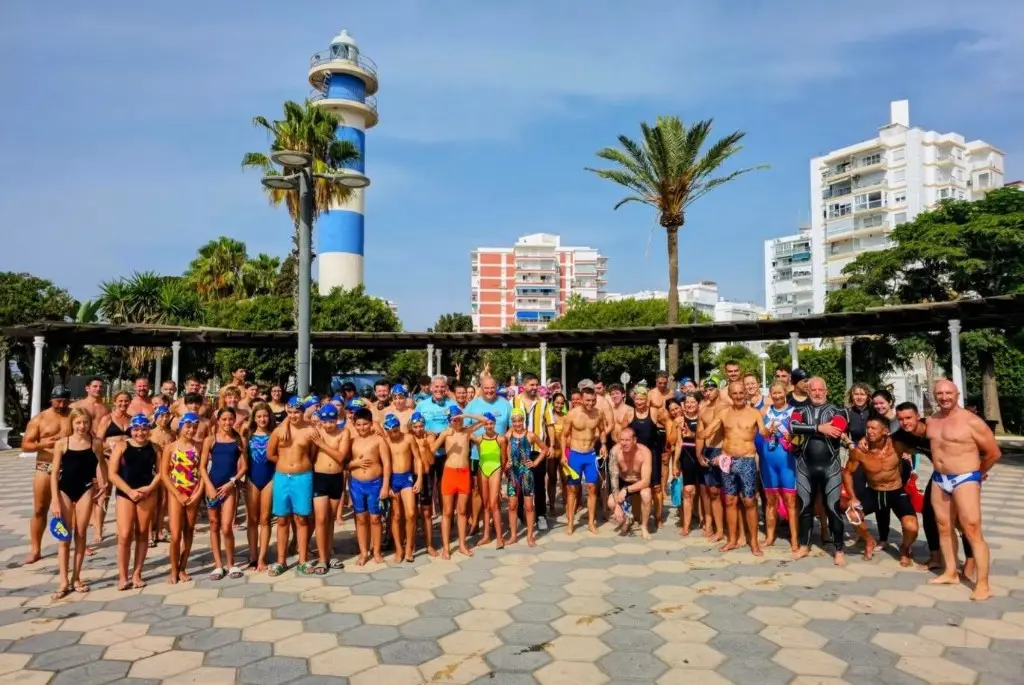
Swimmers come from Vélez-Málaga, Torre del Mar and the rest of the district.
The Axarquía is a land of sea and mountains. Our swimmers grow up between the beaches of Torre del Mar, the trails of the Almijara, and the white villages inland. They come from Vélez-Málaga, Torre del Mar, Algarrobo, Benamocarra, Almayate, from all over the region. And you notice it in the locker room: people from different places mix here and end up forming one team.
Living on the Costa del Sol has a direct consequence: the water is always nearby. Beaches, community pools, farm ponds, reservoirs. In summer the region fills up and the sea becomes the playground of thousands of families. Knowing how to swim here is not just another after-school activity: it is a basic safety measure.
That is why when we go away to compete and the name “Axarquía” appears on the results sheet, it means something to us. We are the club of a region that earns respect in the water, even though we come from a mid-size town and compete against clubs with far more resources.
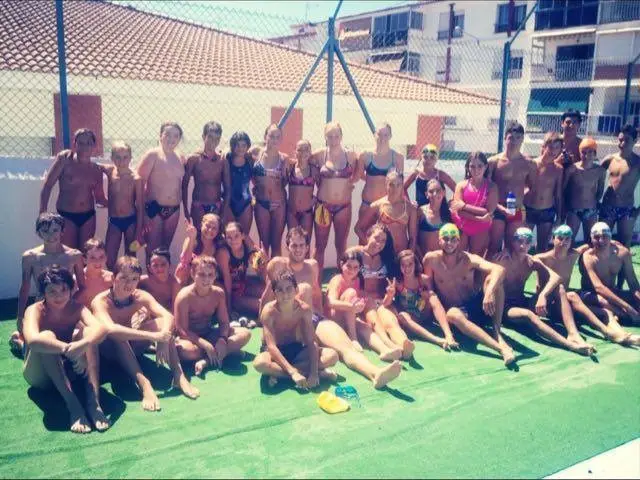
Five things we do not negotiate, whoever is on the pool deck.
For the coach, the teammate, the opponent, and the official. A CNA swimmer is recognized by how they behave when they win and, above all, by how they behave when they lose.
There are no shortcuts in swimming. You train technique until it comes on its own, you keep the schedule, and you finish the set. The result comes later, and it comes only if the work is done.
Every swimmer has their own pace. Our job is to take them to the next level when they are ready, not to pick the four fastest and forget the rest.
Families know what is being trained, why, and with what goal. Asking does not bother us: asking is part of being in the club.
The facility, the equipment, and CNA’s good name belong to everyone. Leave them as you found them, or better.
We train at the Piscina Municipal José Eduardo Hernández in Torre del Mar. The Desafío group trains in Vélez-Málaga. There is an office in Vélez-Málaga and one in Torre del Mar.
CNA trains in Torre del Mar, at the Piscina Municipal José Eduardo Hernández, where the Ayuntamiento de Vélez-Málaga puts lanes at the service of the club and of age-group meets. The Desafío group trains in Vélez-Málaga.
There are two offices, Monday to Friday, 16:30–18:30. Vélez-Málaga: C/ Alcalde Manuel Reyna, 1 A, phone 952 558 731. Torre del Mar: Piscina Municipal José Eduardo Hernández, C/ Lucero s/n, phone and WhatsApp 699 192 143. Enrollment, licences and call-ups are coordinated from the offices. Vélez and Torre del Mar are not two worlds: they are the same municipality and the same club.
Technical details (dimensions, number of lanes, and time slots) are confirmed each season with the facility-use agreement. If you need the exact figures for a federation license, write us and we will send them in writing.
Training
Piscina Municipal José Eduardo Hernández
Torre del Mar
Ayuntamiento de Vélez-Málaga
This group trains in Vélez-Málaga.
Directions to the poolEnrol
Monday to Friday, 16:30–18:30
Vélez-Málaga office
C/ Alcalde Manuel Reyna, 1 A
29700 Vélez-Málaga
Torre del Mar office
C/ Lucero s/n
Torre del Mar
699 192 143 · phone and WhatsApp
Directions to Vélez-MálagaSource: club (2026-27 season meeting, 7 Oct 2026)
Finance and club offices
Technical director
In charge of Escuela and coordination of the cantera groups
CNA lead
Swim School: In charge: Carlos Díaz
Coaches: Andrea V. + Rafa Díaz
Coaches: Andrea V. + Rafa Díaz
Coaches: Rubén Quero + Javier del Castillo
Coaches: Javier del Castillo + Rubén Quero
Offices, Monday to Friday, 16:30–18:30: Vélez-Málaga 952 558 731, Torre del Mar 699 192 143, info@elcna.es.
A swim club works with children in locker rooms, on trips, and at training camps. That requires clear rules, in writing.
Club Natación Axarquía complies with what Spanish law requires on the protection of children and adolescents from violence.
We have a designated child-protection lead within the club, who is the point of contact for any family, swimmer, or staff member who wants to raise a concern. You do not need proof or certainty: a doubt is enough to bring it forward.
Our conduct rules are concrete and applied to the reality of a pool: proper use of locker rooms, presence of responsible adults on trips, criteria on the use of phones and cameras in locker-room areas, and clear guidelines for communication between coaches and minors, always through channels known to families.
Any communication is treated confidentially and with respect for everyone involved. When the facts require it, the club cooperates with social services, law enforcement, and the relevant federation, without substituting their work or running parallel internal investigations.
The club designates a child-protection lead, accessible to families and swimmers, whose name and contact details are communicated at the start of the season.
Written protocol on supervision, accompaniment on trips, overnight stays, and use of mobile devices in sensitive areas.
Communication with minors happens through channels known to families, never through private, undocumented routes.
The coaching staff receives training and periodic reminders on good treatment, spotting indicators, and acting on a suspicion.
You can speak directly with the child-protection lead, go to either club office, or write to info@elcna.es indicating that it is a child-protection matter. You will receive a response and an explanation of the next steps. In situations of immediate risk, call 112.
Child-protection lead: Person designated by the board; name and contact pending confirmation.
Informational document. The club’s full protocol is available at the office for members and families.